Bed bug populations exploit the climate-controlled interiors of North Texas properties, surviving inside wall framing, hollow furniture legs, and behind switch plates. Conventional over-the-counter pyrethroid sprays…
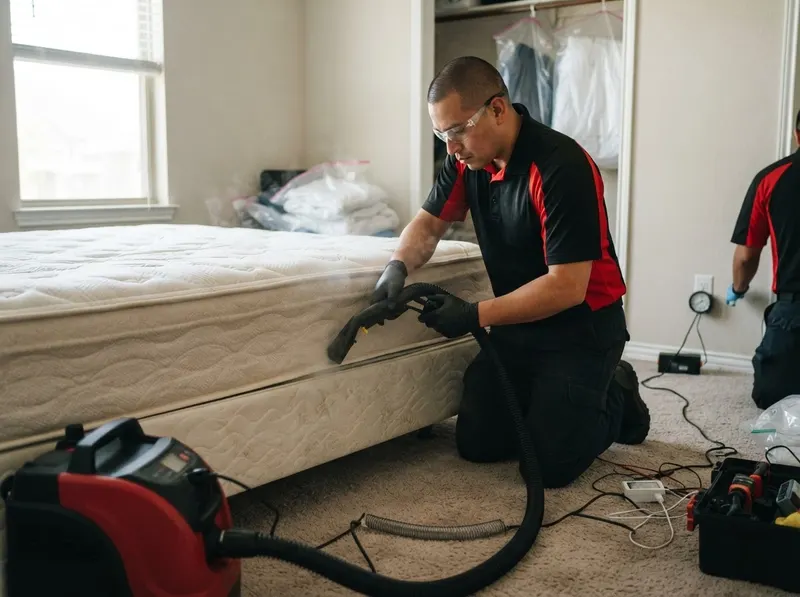
Bed bug populations exploit the climate-controlled interiors of North Texas properties, surviving inside wall framing, hollow furniture legs, and behind switch plates. Conventional over-the-counter pyrethroid sprays regularly fail due to widespread genetic resistance, which causes gravid females to scatter deeper into neighboring rooms rather than dying. Effective remediation relies on thermal dynamics. Sustained heat reaching at least 122°F compromises insect cellular structures and coagulates cellular proteins within minutes, penetrating deep into textiles, box springs, and baseboard gaps that chemical sprays cannot reach. Precision residual barriers are then placed at entry thresholds and perimeter cracks to eliminate any secondary emergence.
Selecting whole-structure thermal remediation over localized precision treatments depends on the spread of activity. If bed bug evidence is isolated to a single headboard or mattress in a guest bedroom, targeted residual and steam applications provide a contained, low-impact intervention. If insect molts, fecal specking, or bites span multiple bedrooms or shared living areas in neighborhoods like Stonebriar, Newman Village, or Phillips Creek Ranch, complete structural heat treatment becomes necessary. The trade-off requires strict pre-treatment preparation, such as removing aerosol cans, wax candles, and delicate vinyl items before heating, in exchange for a complete, single-visit solution that does not rely on multiple rounds of chemical aerosolization.
Local architectural features throughout master-planned communities in Starwood, Richwoods, and Shaddock Creek Estates often include multi-story floor plans with high ceilings, spray-foam insulation, and complex baseboard trim. These structural elements retain insect harborages along interior perimeter walls. Treatment protocol follows three sequential steps: first, physical inspection of headboards, electrical faceplates, and carpet tack strips verifies harborages; second, mobile heating units and high-velocity air movers establish lethal core temperatures throughout affected zones for a minimum 90-minute sustained hold; third, targeted desiccant dusts and non-repellent residual compounds are layered into structural wall voids to maintain active protection without exposing household surfaces to chemical overkill.
Every job gets a firm, written price after a free on-site visit.
Tell us about your bed bug thermal & precision treatment job in Frisco and we'll send a clear, written quote, usually the same day.
 Prairie Fox Pest Control